
plants:lavender
Lavender

English Lavender
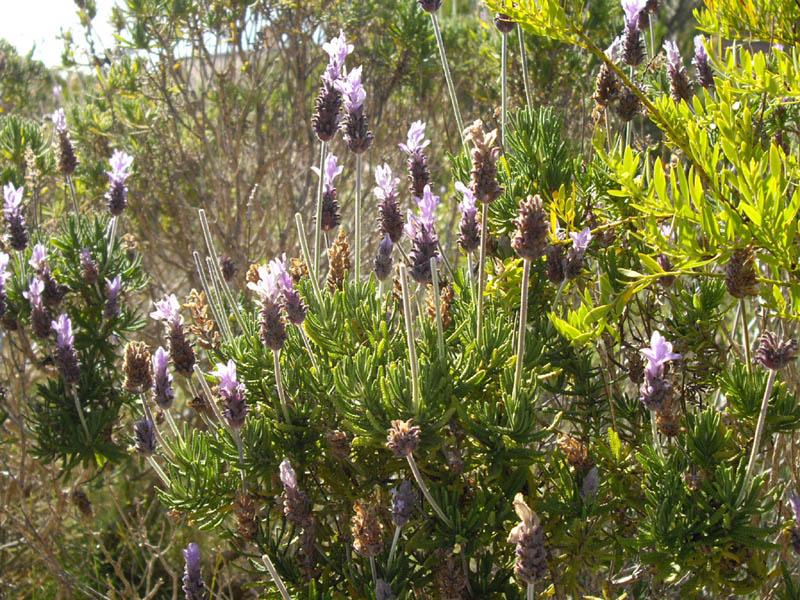
(Photo: Offnfopt, Public Domain)
| English | French | Latin | Greek | Japanese | Chinese | Yivalese(conlang) |
|---|---|---|---|---|---|---|
| Lavender | Lavande | Lavandula | Λεβάντα (Levánta) | 薫衣草 (kunnigusa) | 薰衣草 (xūnyīcǎo) | Delnarai (NNnxwy) |
| From Latin “lavare” (to wash), referencing its historical use in Roman baths and laundry. | “Scenting Clothes Grass” | Moon (Dlnx) + Crow (WYwx) | ||||
| | 薫: 艹 (Grass) + 重/熏 (To smoke/perfume) 衣: Cloth/Garment 草: Grass/Herb | Star (Nn) + Rope (Nx) + Bird (Wy) | ||||
Short Description
Lavender is a genus of 47 known species of flowering plants in the mint family, Lamiaceae. It is a perennial shrub known for its spikes of aromatic flowers and silvery-green foliage. Historically prized for its essential oils and culinary uses.
 Note: While safe for humans in culinary doses, concentrated lavender oil can be toxic to cats and dogs if ingested or applied to skin.
Range and Hardiness
- Native Range: The Mediterranean, Middle East, and India.
- Growth: Low-growing mounded shrub; usually 0.5 to 1 meter in height.
- Hardiness: Generally hardy in USDA zones 5 - 9. (English Lavender is the hardiest; French and Spanish varieties prefer zones 7 - 9).
| Zone | West Coast Example | Climate Note |
|---|---|---|
| Zone 5 | | Cold Limit - Requires “English” varieties; needs snow cover or mulch to protect roots from deep freezes. |
| Zone 7 | | Ideal Summer - Enjoys dry summers, but must be planted in gravelly soil to avoid root rot during rainy winters. |
| Zone 9 | | Warm Limit - High humidity can be a struggle; requires high airflow and sandier soil to prevent fungal growth. |
Species Classification
| Image | Species | Common Name | Description | Native Region |
|---|---|---|---|---|
 | L. angustifolia | English Lavender | The “true” lavender. Shortest spikes, sweetest scent, and most cold-hardy. Used for top-tier oils. | Mediterranean |
 | L. latifolia | French / Spike Lavender | Wider leaves and higher camphor content. Scent is more “medicinal” and pungent than English types. | Western Mediterranean |
 | L. stoechas | Italian / Spanish Lavender | Distinctive “rabbit ear” bracts on top of the flower. Very heat tolerant but less cold-hardy. | Spain / Italy / N. Africa |
 | L. dentata | French / Toothed Lavender | Named for its serrated (toothed) leaf edges. Woody shrub with a mild, lavender-rosemary scent. | Spain / North Africa |
Magical Qualities
Historical & Shamanistic Lore
- Spiritual Purification: The name derives from the Latin lavare (to wash). While Romans used it for physical bathing, Shamanistic traditions evolved this into “soul washing”—using the smoke of dried lavender to scrub the aura of heavy emotional attachments.
- The Scented Shield: In Japanese folklore (where it is known as Kunnigusa), aromatic herbs were tucked into the sleeves of kimonos. It was believed that a person surrounded by a cloud of scent was invisible to “low-level” hungry ghosts, who are attracted to the smell of decay rather than blossoms.
- Mercury's Herb: In Western alchemy, it is ruled by Mercury. It is used to “quicken” the mind and facilitate communication between the physical and spiritual realms.
Metaphysical & Ritual Use
- The Third Eye: Associated with the Ajna (Third Eye) Chakra. It is used in meditation to enhance psychic sight and “cool” an overactive mind, allowing for clearer intuition and premonitions.
- Tempering the Spirit: Used in rituals involving the “sweetening” of a person's temperament. It is believed to bridge the gap between anger and understanding, facilitating peaceful resolutions in hostile environments.
- The Dream Bridge (Grief & Peace): Lavender is used for honoring memory, specifically focusing on the peace of the rest without the weight of earthly anxieties.
plants/lavender.txt · Last modified: by A User Not Logged in
Except where otherwise noted, content on this wiki is licensed under the following license: CC Attribution-Share Alike 4.0 International


